
Access Routes Maintained for Utility and Property Lines
Right-of-Way and Fence-Line Clearing in Hawkins, Tyler, Longview, and the surrounding areas for properties with overgrown easements, obstructed boundary lines, or vegetation encroaching on utility corridors
Right-of-way corridors choked with brush and saplings block utility crews from maintaining infrastructure, while fence lines disappearing under vine growth and volunteer trees make boundary verification impossible during surveys or neighbor disputes. Double M Land Management clears right-of-way and fence-line areas in Hawkins, Tyler, Longview, and the surrounding areas where vegetation has reclaimed access paths, obstructed fence visibility, or grown into utility easements that power companies and pipeline operators need open for inspection and maintenance work. Clearing these strips restores legal access, prevents fence damage from tree roots and falling limbs, and maintains compliance with easement agreements that require landowners to keep corridors navigable.
The work involves cutting and removing brush, small trees, and invasive species along defined corridor widths using mowers, brush cutters, and forestry mulchers depending on vegetation density and terrain accessibility. Crews follow property lines or easement boundaries marked by survey stakes or recorded plat dimensions, clearing enough width for vehicle access or visibility while leaving desirable trees outside the corridor untouched.
Request a corridor assessment to review clearing needs along your property boundaries or utility easements.
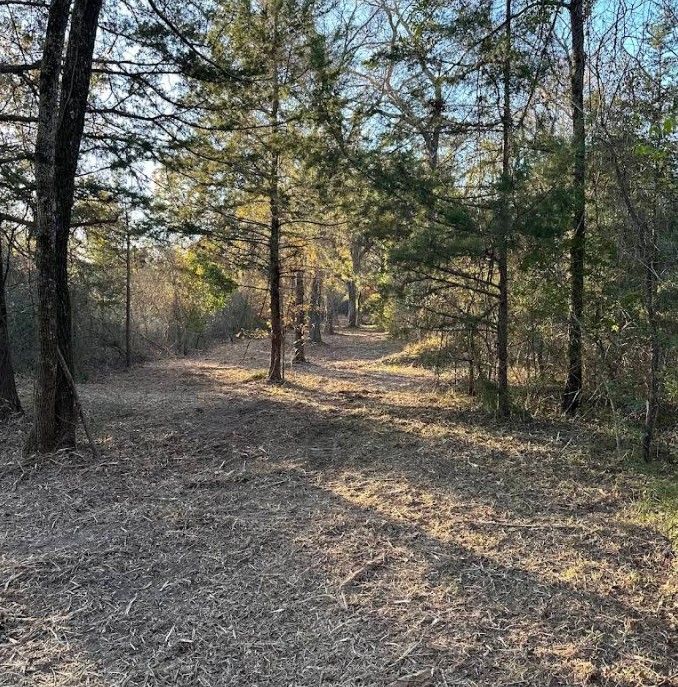
Why Fence Lines and Easements Need Regular Clearing
Clearing begins with identifying property corners and boundary markers to establish accurate corridor edges, then cutting vegetation in passes that separate material by size—mowers handle grasses and light brush, while skid steers with rotary cutters or mulcher heads process saplings and woody growth up to several inches in diameter. Operators pile or mulch debris depending on client preference and burn regulations in the area.
Once clearing finishes, you see fence lines that run straight and visible from end to end instead of vanishing into thickets, making fence repairs and livestock checks straightforward. Utility easements become drivable for service trucks, and property boundaries remain clearly defined so encroachment disputes do not develop when neighbors install improvements near shared lines.
Services include removing stumps that interfere with mowing or vehicle travel, treating cut stumps with herbicide to prevent resprouting, and disposing of debris through chipping, burning, or hauling depending on volume and site conditions. Maintenance clearing schedules vary based on how quickly vegetation regrows, with some corridors needing annual attention and others remaining open for several years after initial clearing.
Answers to Frequent Service Questions
Landowners in Hawkins, Tyler, Longview, and the surrounding areas often need guidance on how clearing affects property boundaries, easement obligations, and ongoing vegetation management after initial work completes.
What width should right-of-way corridors be cleared?
Utility easements typically require twelve to fifteen feet of clearance on each side of buried lines or overhead wires, while property fence lines need only enough width for vehicle access and fence maintenance, usually eight to ten feet total.
How does clearing affect existing fences?
Crews work carefully around fence posts and wire, but fences damaged by years of tree growth or rust may need repair after clearing exposes weakened sections that were previously supported by surrounding vegetation.
When should herbicide treatment follow clearing?
Applying herbicide to freshly cut stumps within hours of cutting prevents resprouting by delivering chemical into the root system while vascular tissue remains active, reducing regrowth that would otherwise appear within weeks.
What happens to large trees growing on boundary lines?
Trees directly on surveyed property lines become shared responsibility between adjacent owners, so removal decisions require neighbor agreement unless the tree presents an immediate safety hazard like severe rot or leaning toward structures.
How often does cleared vegetation grow back?
Regrowth speed depends on species composition and soil fertility—cleared areas dominated by fast-growing species like privet or Chinese tallow may need follow-up clearing within two years, while slower sites remain open three to five years.
Double M Land Management restores visibility and access along property boundaries and utility corridors where vegetation has encroached beyond manageable levels. Schedule a fence-line evaluation to determine clearing scope and long-term maintenance intervals for your acreage.