Building Sites Prepared for Level Foundations
House, Shop and Mobile-Home Pads in Hawkins, Tyler, Longview, and the surrounding areas for properties needing construction sites leveled, compacted, and ready for foundation work or unit placement
Construction sites prepare the ground for buildings by creating flat, stable surfaces that prevent settling, drainage problems, and structural stress after foundations or mobile homes go in place. Double M Land Management builds house, shop, and mobile-home pads in Hawkins, Tyler, Longview, and the surrounding areas for clients who need building sites cut into sloped terrain, filled to raise elevation above flood-prone areas, or leveled on uneven ground where natural contours would create foundation challenges. Pad construction involves earthmoving to establish grade, compacting fill material in layers to achieve load-bearing capacity, and shaping drainage slopes that direct water away from the finished building footprint.
The process starts with clearing vegetation and topsoil from the pad area, then cutting into high spots or importing fill dirt to reach target elevations that match site plans and local building codes. Operators compact soil in six-to-eight-inch lifts using vibrating plate compactors or roller drums, ensuring each layer achieves density specifications before adding the next lift to prevent future settling that would crack slabs or tilt structures.
Schedule a site consultation to review pad dimensions, elevation requirements, and soil conditions for your building project.
What Proper Pad Construction Requires
Site work begins with staking pad corners and establishing finished grade elevations using laser levels, then stripping organic topsoil that would compress under structural loads and cause uneven settling. Equipment operators shape the subgrade to create positive drainage away from the building footprint, typically maintaining two percent slope from pad center toward edges so water sheds off the finished surface rather than pooling against foundations or under mobile home frames.
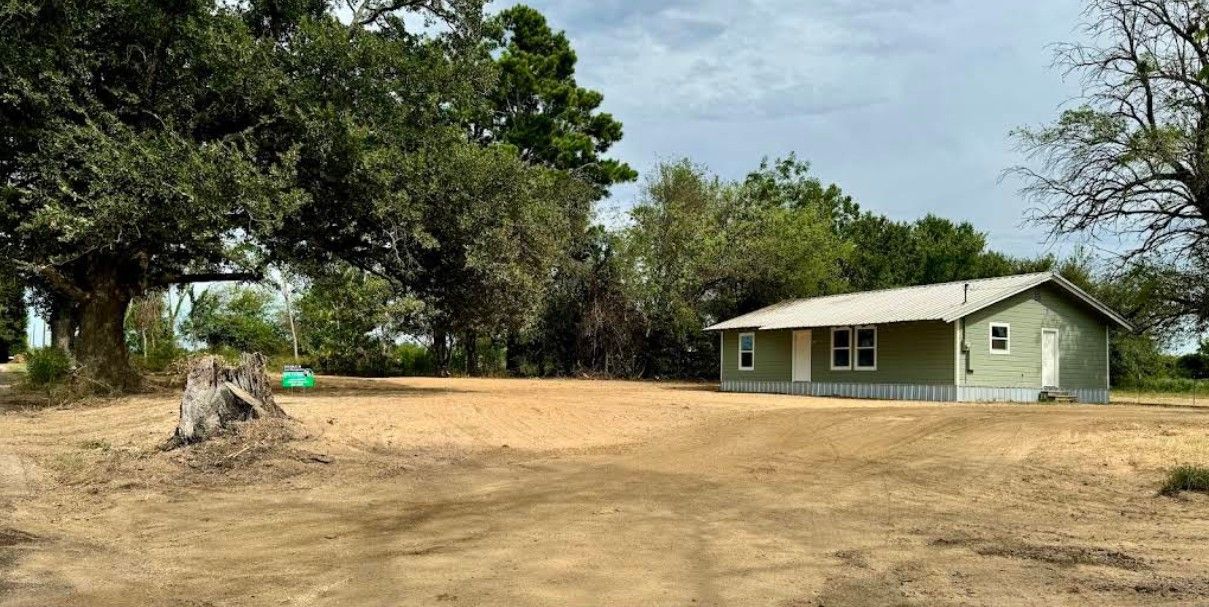
After pad construction finishes, you see a flat, firm surface that remains stable under foot traffic and light equipment, with no soft spots or depressions that indicate inadequate compaction. Water runs off the pad during rain instead of ponding, and the site sits at an elevation that provides clearance above surrounding grade for drainage and prevents moisture from wicking into floor systems or concrete slabs.
Pad preparation includes installing culverts or drainage pipes where water needs to pass under access drives approaching the building site, spreading and compacting gravel base layers if the client plans concrete slab foundations, and fine-grading the surface to match foundation contractor specifications. Work does not include pouring concrete or installing pier-and-beam systems, which require separate foundation contractors after pad preparation completes.
What Property Owners Usually Ask
Clients in Hawkins, Tyler, Longview, and the surrounding areas frequently ask about soil conditions, compaction standards, and how pad elevation affects long-term building performance, especially when working with expansive clay soils common in many Texas areas.
What soil types work best for building pads?
Sandy loam and decomposed granite compact reliably and drain well, while heavy clay requires more compaction effort and benefits from mixing in aggregate to improve stability and reduce expansion-contraction cycles during wet-dry seasons.
How much should pads be raised above surrounding grade?
Most pads sit at least twelve inches above natural ground level to provide drainage clearance and prevent water from flowing onto the building site during heavy rains, with higher elevations needed in flood-prone areas or sites with poor natural drainage.
When does imported fill dirt become necessary?
Sites with steep slopes or low-lying areas often lack enough on-site soil to reach target elevations through cutting alone, requiring fill dirt hauled from borrow pits to build up the pad without creating unstable slopes around the perimeter.
How long should pads settle before construction starts?
Properly compacted pads using granular fill materials stabilize within days and support immediate construction, while pads built with clay-rich fill may benefit from a waiting period to allow moisture content to stabilize and reveal any soft spots needing additional compaction.
What equipment checks pad compaction quality?
Nuclear density gauges or plate load tests measure soil compaction as a percentage of maximum density, with most building applications requiring ninety-five percent compaction or higher to prevent settling under structural loads.
Double M Land Management prepares building sites with graded, compacted pads that provide stable foundations for residential and shop construction. Contact us to discuss pad specifications and schedule earthwork for your building timeline.