
Access Routes Built to Handle Regular Traffic
Driveway Construction and Repair in Hawkins, Tyler, Longview, and the surrounding areas for properties needing new access routes installed, gravel surfaces restored, or rutted drives rebuilt for reliable year-round use
Driveways that develop ruts deep enough to scrape vehicle undercarriages, wash out during storms, or turn impassable during wet weather all indicate base failure or inadequate drainage design that worsens with each passing vehicle. Double M Land Management handles driveway construction and repair in Hawkins, Tyler, Longview, and the surrounding areas where properties need new access routes built from road to home, existing gravel drives rebuilt after years of deterioration, or dirt tracks upgraded to handle delivery trucks and emergency vehicles without creating maintenance emergencies. New construction establishes proper base layers and drainage features, while repairs address failures by rebuilding damaged sections with improved materials and grading that prevents recurring problems.
Construction involves clearing the drive corridor, excavating to subgrade depth, installing culverts where water crosses the route, then layering and compacting base rock before applying surface gravel sized for vehicle traffic. Repair work cuts out failed sections, adds fabric or grid stabilization if subgrade soil lacks bearing strength, rebuilds the base course, and restores crown or cross-slope that sheds water to ditch lines instead of letting it saturate the drive surface.
Request a driveway evaluation to identify failure causes and review construction or repair options for your access needs.
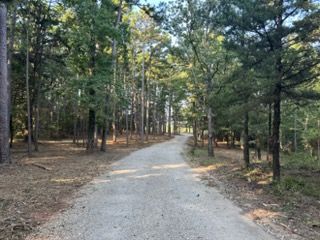
What Changes After Driveway Work Completes
Work begins by surveying the route to identify low spots where water ponds and high points that create drainage dams, then establishing grade elevations that provide continuous slope toward drainage outlets. Operators excavate rutted or soft areas down to firm subgrade, compact the bottom surface, then place base rock in lifts—typically four to six inches of larger aggregate covered by two to three inches of smaller crusher-run material that locks together under compaction to create a stable driving surface.
Once construction or repair finishes, you drive over a firm surface that does not deflect under tire weight or develop ruts when vehicles pass during wet conditions. Water sheets off the crowned center toward edges instead of running down the wheel tracks, and the drive remains passable for delivery trucks, service vehicles, and emergency responders regardless of recent rainfall.
Projects include shaping roadside ditches to carry runoff away from the drive, installing culverts sized for peak storm flows where drives cross natural drainage paths, and adding geotextile fabric under base rock in areas where soft subgrade soils would otherwise allow rock to sink into mud. Maintenance intervals depend on traffic volume and material quality, with well-built drives needing only occasional gravel topdressing every few years to replace surface material displaced by traffic.
Answers to Frequent Service Questions
Property owners in Hawkins, Tyler, Longview, and the surrounding areas typically want to understand material choices, drainage solutions, and how construction methods affect long-term driveway performance under local soil and weather conditions.
What base rock size works best for driveways?
Base layers use crushed limestone or granite ranging from one to three inches in diameter for structural strength, topped with crusher-run or minus-two-inch material that contains fine particles filling voids between larger stones to create a dense, stable surface.
How does crown height affect driveway drainage?
Drives typically crown three to four inches higher at the centerline than at edges for every twelve feet of width, creating enough slope to move water off the surface without making the cross-angle uncomfortable for vehicles.
When should geotextile fabric be installed?
Fabric goes down over subgrade before base rock in areas with clay soils or poor drainage where repeated wetting and drying causes subgrade pumping—a condition where wet soil squeezes up through rock layers under vehicle weight and creates soft spots.
How deep should driveway base layers be?
Residential drives handling passenger vehicles and light trucks typically use six to eight inches of compacted base rock, while drives accommodating heavy delivery trucks or equipment need ten to twelve inches to distribute loads without overstressing subgrade soils.
What causes driveways to wash out during storms?
Inadequate culvert sizing, missing cross-drainage features, or reverse slope sections that trap water all concentrate runoff energy that erodes surface gravel and undercuts base layers, creating washouts that expand rapidly once erosion channels form.
Double M Land Management builds and repairs driveways using proper base preparation and drainage design to maintain access through all weather conditions. Arrange a site visit to review your current driveway condition and discuss construction solutions that fit your property layout.